What Is Dry Lining and Why It Comes Before Plastering in Pontypridd
Thinking about dry lining in Pontypridd? We explain what it is, when you need it, and how it works before plastering. Call 07887 778383 for a quote.
Dry Lining in Pontypridd: What It Is and Why It Comes Before Plastering
Plasterboard goes up on the walls. A skim coat goes over it. Job done. That is the short version of dry lining, but there is quite a bit more to it than that, and understanding the process helps you make better decisions when you are renovating a room in Pontypridd.
Dry lining is one of the core services we offer, alongside skimming, rendering and repairs. It is often the first stage of a plastering project, and getting it right makes everything that follows much easier. This guide explains what dry lining actually involves, when it makes sense, and what to expect when we carry out the work.
What Is Dry Lining?
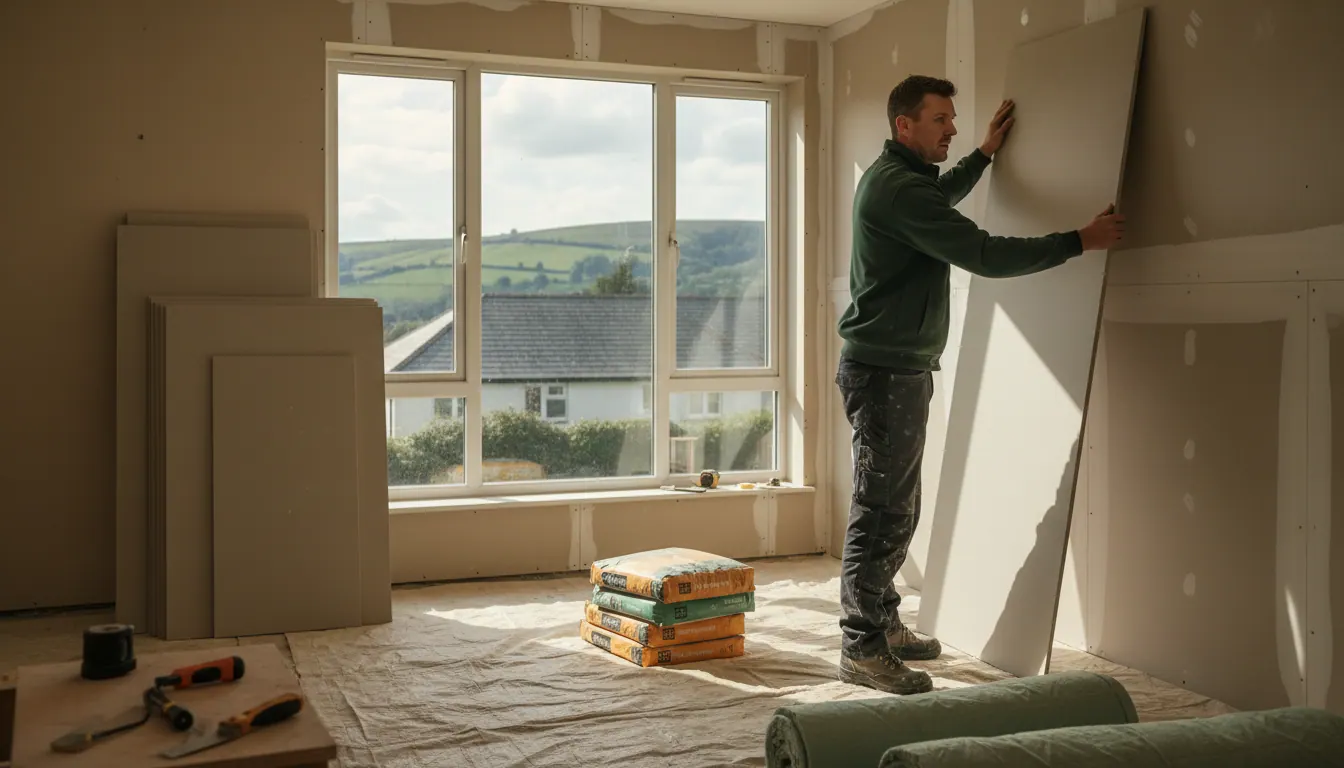
Dry lining is the process of fixing plasterboard (sometimes called drywall or gypsum board) to walls or ceilings before applying a finish plaster skim. The name comes from the fact that no wet render or backing coat is applied to the wall first. It is a drier, faster method than traditional sand-and-cement rendering or multi-coat plastering.
There are a couple of main ways it is done:
- Dot and dab: Plasterboard is fixed directly to a masonry wall using blobs of adhesive. This is common in internal walls where the surface is reasonably flat.
- Timber or metal stud framing: A frame is built out from the wall and plasterboard is screwed to it. This is used where walls are very uneven, where insulation needs to be fitted behind the board, or where a new partition wall is being created.
Once the boards are up and the joints are taped and filled, we apply a thin skim coat of finishing plaster over the whole surface. That skim is what gives you the smooth, paint-ready finish.
When Does a Room in Pontypridd Need Dry Lining?
Not every job calls for dry lining. Sometimes a wall just needs a fresh skim over the existing plaster, or a patch repair where a section has blown or cracked. But there are situations where dry lining is clearly the right approach.
The existing plaster is beyond saving. Old plaster can deteriorate to the point where patching it makes little sense. If large areas are hollow, crumbling or have suffered water damage, stripping back to the masonry and dry lining gives you a solid, stable base to work from.
You are building a new partition wall. If you are dividing a room, adding a stud wall to create a hallway or boxing in pipework, plasterboard on a stud frame is the standard approach. It is then skimmed to match the rest of the room.
You want to add insulation. Fitting insulated plasterboard or leaving a cavity for insulation behind the boards can improve a room's warmth noticeably. This is worth considering in older Pontypridd properties where solid walls are common.
The walls are too uneven to skim directly. Some walls, particularly in older houses, are so irregular that applying a finish skim straight over them would require a very thick backing coat. Dry lining can be quicker and more practical in those cases.
A room is being completely renovated. If everything is being stripped out anyway, dry lining gives you a fresh start with flat, true walls that are straightforward to decorate.
What About Ceilings?
Dry lining is not just for walls. Plasterboard is also used on ceilings, particularly when old lath and plaster has failed, when joists have been exposed during building work, or when a flat, smooth ceiling is needed from scratch.
If you have an old Artex ceiling you want to cover, it is worth reading our guide on Covering Old Artex Ceilings in Pontypridd: What You Need to Know before any work starts. Textured coatings in properties built before the mid-1980s may contain asbestos, and that changes what can safely be done. Artex should never be sanded, scraped or disturbed without first consulting a licensed professional.
The Skim Coat: The Finishing Stage After Dry Lining
Once the plasterboard is up and the joints are properly prepared, the skim coat is what transforms the room. A skim is a thin layer of finishing plaster, typically around 2 to 3 mm, applied across the whole surface to create a smooth, even finish.
This is where the skill really shows. A good skim is flat, tight and free of trowel marks. It takes experience to get the timing right, to keep a wet edge and to finish the surface cleanly before it sets. We take real pride in that smooth finish, because it is what everything else depends on. Paint sits better on it, the room looks sharper and the whole job feels properly done.
What to Expect on the Day
We know that having someone working in your home is a disruption, and we try to keep that to a minimum. Before we arrive, the room needs to be cleared of furniture and fittings as much as possible. Our guide on How to Prepare a Room for Plastering in Pontypridd walks through exactly what to do, which saves time on the day and protects your belongings.
On the day itself, we cover floors, work tidily and clean up thoroughly before we leave. Punctuality matters to us. If we say we will be there at a certain time, we will be.
Ryan Davies, a recent customer, put it well:
Absolutely excellent service from start to finish. The quality of the plastering was excellent, everything was completed on time and to a really high standard. He was also very friendly, polite and professional throughout. Would definitely recommend and wouldn't hesitate to use him again. ⭐⭐⭐⭐⭐
That is what we aim for on every job in Pontypridd.
Drying and Decorating After Dry Lining
New plaster needs time to dry properly before you can decorate. The drying time varies depending on the conditions in the room, the thickness of the skim and the time of year. We will give you specific advice once the work is done, but the general rule is to wait until the plaster has turned from dark to a uniform pale colour and feels genuinely dry to the touch.
When it is ready, the first coat of paint should be a mist coat: a thinned-down emulsion that soaks into the new plaster rather than sitting on the surface and peeling. Applying standard paint straight onto new plaster is one of the most common mistakes, and it can cause the paint to flake away. We always make sure customers know what to do next before we leave.
How to Choose the Right Approach for Your Room
Not sure whether your room needs dry lining, a fresh skim, or just a patch repair? The honest answer is that it depends on the condition of the existing walls and what you are trying to achieve. We are always happy to take a look and give a straightforward view.
A few questions worth thinking about before you get in touch:
- How old is the existing plaster, and is it still firmly attached to the wall?
- Are there large areas that sound hollow when you tap them?
- Is the room being fully renovated, or is it a cosmetic refresh?
- Do you want to add insulation at the same time?
- Are you creating any new walls or partitions?
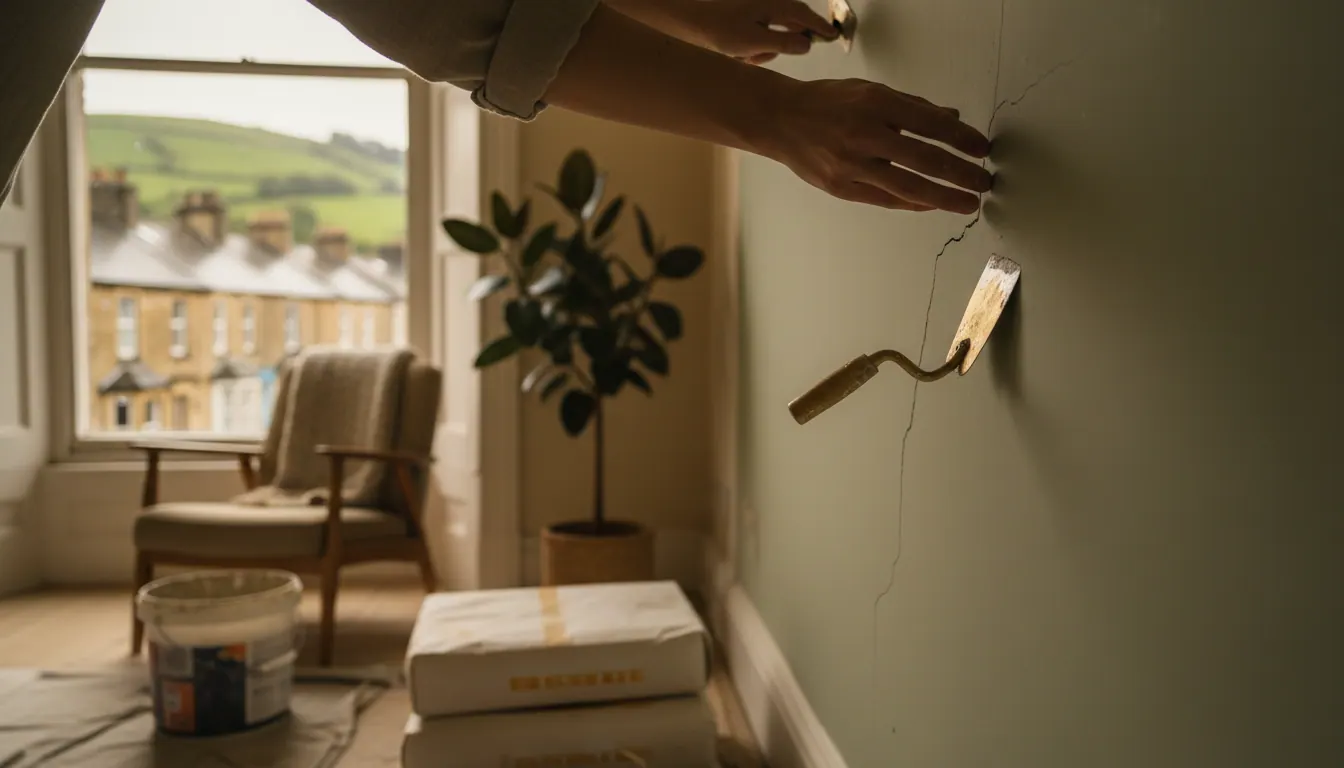
If you are dealing with cracks rather than widespread plaster failure, our article on Cracks in Plaster Walls: When to Repair and When to Skim is a useful starting point. Cracks that are widening, running diagonally or accompanied by signs of damp should be assessed by a suitable professional before any plastering work goes ahead.
Frequently Asked Questions About Dry Lining in Pontypridd
What is the difference between dry lining and plastering? Dry lining is the process of fixing plasterboard to walls or ceilings to create a flat, stable surface. Plastering (specifically skimming) is the thin finishing coat applied over the plasterboard to make it smooth and ready to paint. The two usually go together: dry lining comes first, skimming follows.
Can you dry line over existing plaster? In some cases, yes. If the existing plaster is sound but the wall is uneven, dot-and-dab plasterboard can be applied over it. If the plaster is failing or unstable, it is usually better to remove it first so the boards have a solid base to bond to.
Do I need to move out while dry lining is being done? No. Dry lining is dusty work, so we recommend keeping the affected room clear and closing doors to other rooms. But there is no need to vacate the property.
How do I get a quote for dry lining in Pontypridd? We quote each job individually once we have understood the size and condition of the area involved. The best thing to do is call us or send an enquiry so we can find out what you need.
Get in Touch for a Quote
If you are planning a renovation in Pontypridd and want to talk through whether dry lining is the right approach for your project, we are happy to help. Call us on 07887 778383 or get in touch using our contact form and we will get back to you.
“David did an excellent job tidying up our kitchen walls via a mixture of plastering and skimming. It was at a very professional job at a very reasonable price - he is a nice friendly guy also- so give him a shot I'm sure you won't regret it.”