Cracks in Plaster Walls: When to Repair and When to Skim
Cracks in plaster walls in Pontypridd? We explain what different cracks mean, when to get them assessed, and how we can help with repairs and skimming.
Cracks in plaster walls in Pontypridd: when to repair and when to skim
Cracks appear in plaster walls in almost every home. Some are harmless and some are worth taking seriously, and the tricky part is knowing which is which. David Cleeves Plastering offers wall and plaster repairs and skimming in Pontypridd. This is a general guide to what different cracks can mean, not a diagnosis of your walls.
Why plaster cracks
- Seasonal movement. Buildings expand and contract with temperature and humidity, which often produces fine, shallow cracks.
- Settlement. Some cracking is common as a structure settles. Many settlement cracks are cosmetic once movement has stopped.
- Age. Older plaster can become brittle, hollow out or lose its bond with the wall behind.
- Vibration and impact. Nearby work or drilling into adjacent walls can shake plaster loose.
- Moisture. Water getting into a wall can cause plaster to soften, stain, blow or crack.
Hairline cracks
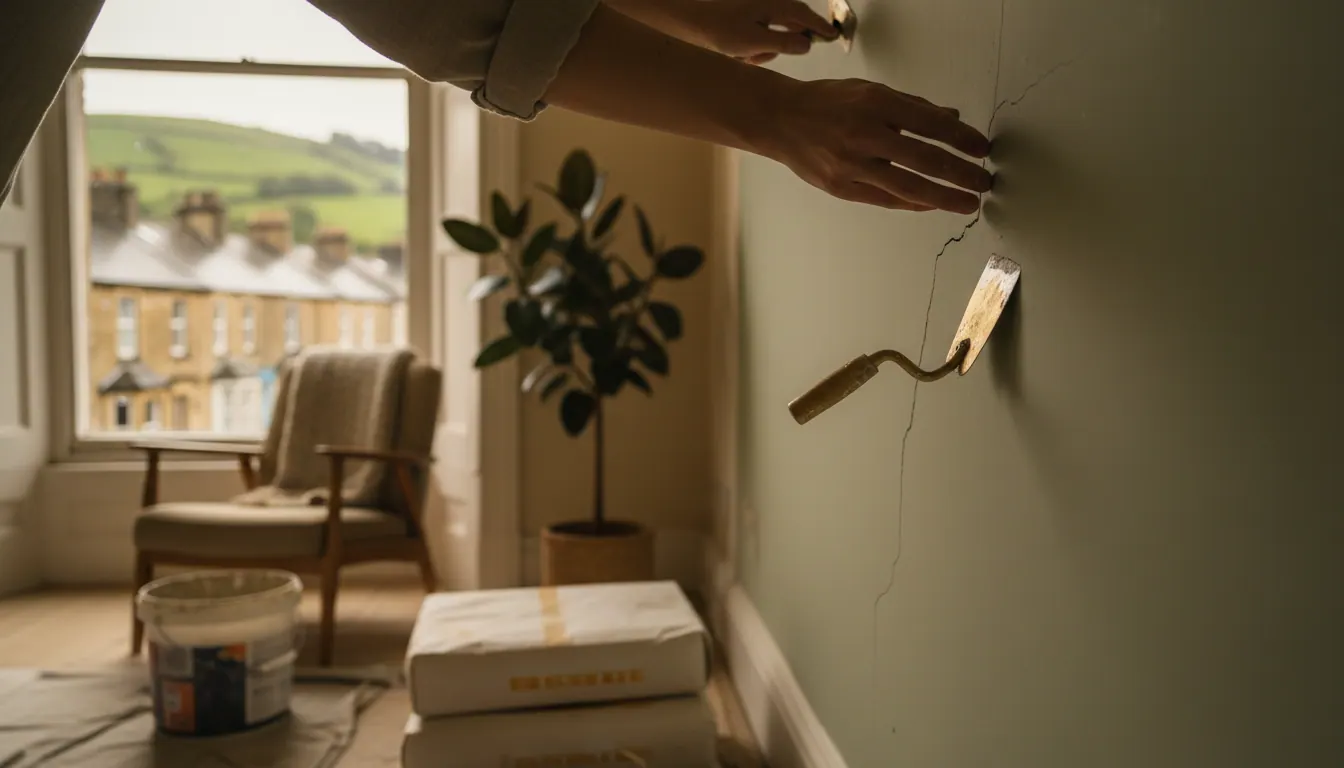
Very fine cracks, the kind you can barely get a fingernail into, are usually cosmetic. They often show around door frames, window reveals and where walls meet ceilings. They can generally be filled and skimmed ready for decorating. If one keeps returning after being filled, the movement behind it has not stopped, and the cause is worth looking into.
Cracks worth a closer look
- Diagonal cracks running from the corners of doors or windows
- Cracks that are wider at one end than the other
- Cracks that reopen soon after being filled
- Cracks with damp patches or staining
- Cracks you can feel a draught through
If you have widening or diagonal cracks, or any crack with signs of damp, get them assessed by a suitable professional before anyone plasters over them. Plastering over an active problem does not fix it.
Blown plaster
Plaster that sounds hollow when you tap it with your knuckles may have lost its bond with the wall behind. This is often called blown plaster. Filling the surface is usually only a short-term fix, and the affected area typically needs to come off back to a sound surface and be replastered.
Patch repair or full skim?
A patch repair usually makes sense when:
- The damage is isolated to one area
- The rest of the plaster is sound
- The room is already decorated and you want to keep the finish
A full skim usually makes more sense when:
- There are several cracks or repairs across the same wall or room
- The plaster is uneven or in generally poor condition
- You are redecorating and want a consistent, smooth surface
See wall and plaster repairs and skimming and plastering. To get ready for the work, see our guide on preparing a room for plastering.
Ceiling cracks and textured coatings
Ceiling cracks follow similar rules. Fine cracks are often just movement, while cracks in a spiderweb pattern, or with sagging, need a closer look first. If a ceiling has an old textured coating such as Artex, remember that some older coatings can contain asbestos. Do not sand or scrape them, and get advice from a licensed professional before any work starts. David Cleeves Plastering does not offer asbestos testing or removal. See our guide on covering Artex ceilings.
What customers say
Customers on Google describe repairs done neatly and without mess. One wrote:
I'm really pleased with the work. David was punctual and did a great job. He plastered a ceiling and repaired the walls and it looks great. He and his partner were very clean - no mess. I would highly recommend and will definitely use them again.
Claire Randell, Google review
Frequently asked questions
Why do my plaster walls keep cracking in the same place? Usually because whatever causes the crack, such as movement or moisture, has not been dealt with. Fill it once the cause is understood.
How do I know if a crack is serious? Most hairline cracks are cosmetic. Widening, diagonal, tapered cracks or cracks with damp are worth having assessed.
Can you plaster over cracks? Small, stable cracks can be prepared and skimmed over. Larger or active cracks need the cause dealt with first.
How do I get a quote? Call 07887 778383 or use the contact form with photos.
Cracked walls in Pontypridd?
Call 07887 778383 or use the contact form with photos, and David will get back to you.
“After having a bad experience with another plasterer, David completely restored our faith. He plastered every room in our house, including covering old artex walls and ceilings, and repaired several walls that were in a poor state. The quality of his work is outstanding, every surface is smooth, ne…”